
Tobacco company levy could raise up to £4.9bn and prevent 10,000 hospital admissions, study suggests
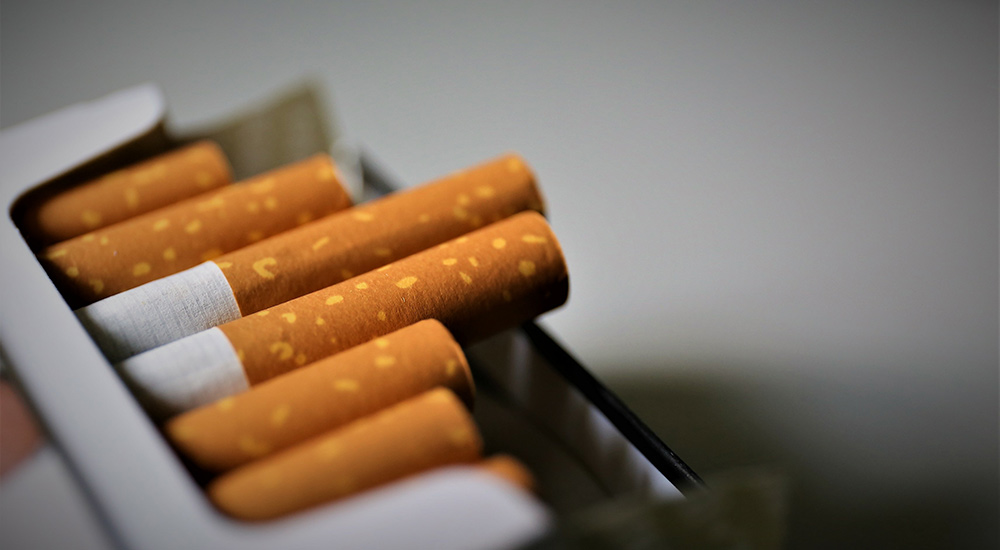
New modelling from the Sheffield Addictions Research Group (SARG) shows a 'polluter pays' levy scheme could cut smoking deaths, reduce hospital admissions, and raise billions in tax revenue.
The UK could raise up to £4.9 billion over five years and significantly improve public health by capping tobacco prices and increasing taxes.
Research published by the Sheffield Addictions Research Group and the University of Bath's Tobacco Control Research Group, provides the first real-world modelling of a proposed 'polluter pays' tobacco levy scheme.
The study found that the proposed policy, aimed at stopping the tobacco industry from using pricing as a marketing tool, could raise between £1 billion and £4.9 billion over five years, depending on the level of price cap and how quickly it is introduced. It could also prevent up to 10,000 hospital admissions and save almost 44,000 years of life over a 20-year period.
Dr Rob Branston, Co-Director of the University of Bath Tobacco Control Research Group and co-author of the study, said: "By passing the Tobacco and Vapes Act, the UK Government has protected a generation from the harmful effects of smoking. Our research shows there is an opportunity for further leadership by tackling the vast profits of an industry that kills more than half of its long-term users.
"This proposed policy would bring about multiple wins: it raises a large amount of money for the government, delivers health benefits, and helps the poorest the most."
How the polluter pays levy scheme could work
The levy could be delivered by setting a maximum wholesale price that the industry could charge for tobacco products, thereby stopping the industry from using price as a promotional tool. To stop shop prices falling, the government would raise taxes to offset falls in wholesale prices.
Dr Branston adds: "Tobacco prices vary considerably: you can go into a shop and buy 20 cigarettes for about £13, or you can pay almost £20 – and those cigarettes are equally as harmful. If you introduce a polluter pays levy and then charge them all at £20, not only will fewer people be able to afford to smoke, but you'd also likely gain more tax revenue for the government. Crucially, that tax revenue will come from the profits of the tobacco industry rather than from people who smoke or small retailers."
The idea of a polluter pays levy has been championed by health organisations including ASH (UK), Cancer Research UK, STOP, the All-Party Parliamentary Group on Smoking and Health, and has featured in political manifestos, but has until now remained theoretical.
Modelling the impact of a polluter pays levy scheme
The Sheffield Addictions Research Group team led a dynamic micro-simulation modelling exercise for England, tracking 250,000 individuals aged 18 to 89. The analysis explored six scenarios, varying the stringency and speed of tobacco price cap implementation, and built on earlier research which informed alcohol minimum unit pricing in Scotland.
Across the six scenarios, a wholesale price cap and associated tax rises were investigated, comparing outcomes against a business-as-usual scenario. Outcomes varied with the price cap level and speed of implementation, with lower caps and higher tax rises yielding larger changes in consumer behaviour, particularly for the most disadvantaged 20% of the population.
An immediate hard cap in England could generate £4.9 billion by 2029 and, by 2044, lead to 1,636 fewer deaths, 43,987 fewer years of life lost, and 10,073 fewer hospital admissions.
Dr Duncan Gillespie, Senior Research Fellow at the Sheffield Addictions Research Group, and lead author of the study, said: "Across all six scenarios we modelled, we saw a consistent pattern: a narrower price range in the market, reduced smoking prevalence, higher tax revenues, and fewer deaths and hospital admissions. While industry revenues declined, consumer expenditure remained largely unchanged, showing that meaningful improvements in public health can be achieved without placing an additional financial burden on consumers."
Hazel Cheeseman, Chief Executive of Action on Smoking and Health (UK), said:
"There is overwhelming public support for making tobacco companies pay for the harm their products cause. A 'polluter pays' levy reflects a clear public mandate to shift the cost burden away from taxpayers and onto an industry that profits from addiction and disease.
"As smoking rates fall, those who continue to smoke are increasingly people facing the greatest disadvantage, who bear the heaviest burden of tobacco harm. This makes it even more important that funding is targeted where it's most needed, to support people to quit and reduce health inequalities.
"With the Tobacco and Vapes Act now in place to create a smokefree generation, Ministers should now consult on introducing this levy as a sustainable way to resource the action needed to make the country smokefree within the next 20 years."
Paper reference
Gillespie D, Morris D, Kai Le Chen R, Brennan A, Branston R (2026) Reducing tobacco supplier profits and pricing power: Modelling the impact of a tobacco price cap and tax increase on socioeconomic inequalities in England Social Science & Medicine DOI: https://doi.org/10.1016/j.socscimed.2026.119325
Funding information
The research was funded by the UK Prevention Research Partnership through the SPECTRUM Consortium, Bloomberg Philanthropies, as part of the Bloomberg Initiative to Reduce Tobacco Use, and Action on Smoking and Health (UK). Dr Gillespie and Professor Brennan are also members of the Local Health and Global Profits consortium.
-
SARG and IAS partner to lead session at Portorož Youth Health Forum 2026
Dr Laura Fenton, Research Fellow at the Sheffield Addictions Research Group (SARG), and Dr Peter Rice, Chair of the Institute of Alcohol Studies (IAS) and President of Eurocare, will co-lead an interactive session at the Portorož Youth Health Forum 2026 in Slovenia.
-
The higher cost of a healthier option: SARG study lifts the lid on why no/lo alcohol beer drinkers feel out of pocket
People buying alcohol-free and low-alcohol beers pay more for choosing a healthier option, according to new research by the Sheffield Addictions Research Group (SARG).
-
SARG researchers lead UK's biggest effort to tackle gambling harms
A major new national effort to tackle gambling harms and shape future policy, prevention and treatment across the UK is being led by researchers from the Sheffield Addictions Research Group.
-
Later pub opening hours linked to surge in alcohol-related ambulance call-outs and crime
Extending late-night opening hours for pubs and bars can lead to a significant increase in alcohol-related ambulance call-outs and reported crime, according to new research involving the Sheffield Addictions Research Group (SARG).
You might also be interested in…
-
QUIT Programme Evaluation
Yorkshire Cancer Research commissioned the Sheffield Centre for Health and Related Research (SCHARR) at the University of Sheffield to carry out a comprehensive evaluation of hospital-based stop smoking services in the region, starting with the Quit programme.
-
STAPM
The Sheffield Tobacco and Alcohol Policy Modelling Platform (STAPM) research programme aims to identify and evaluate approaches to reducing the harms caused by tobacco and alcohol consumption. By providing policymakers with evidence-based insights, STAPM seeks to improve public health policymaking and commissioning.
-
Targeting multiple levels of 'the smoking cessation system' using novel scientific approaches
This programme will develop and apply novel scientific approaches to increase the population rate of smoking cessation.