
Sheffield Addictions
Research Group
Public health and health economic research on alcohol, tobacco, gambling and addiction.
The Sheffield Addictions Research Group (SARG) is based in the Sheffield Centre for Health and Related Research at the University of Sheffield. Our innovative research, spanning from modelling the effects of policy interventions to understanding complex human behaviour, has directly shaped legislation and public health strategies in the UK and internationally.
Research areas

Alcohol
We are an international centre of excellence for public health research on alcohol. Since 2008 our alcohol research has played a key role in current policy and public debate.

Tobacco
We are continually expanding our portfolio of tobacco research, with a commitment to conducting policy-relevant research that can inform evidence-based interventions.

Gambling
We are actively engaged in emerging areas of gambling research, seeking to understand and address the complex issues surrounding addiction and public health.
Featured projects
Latest news
-
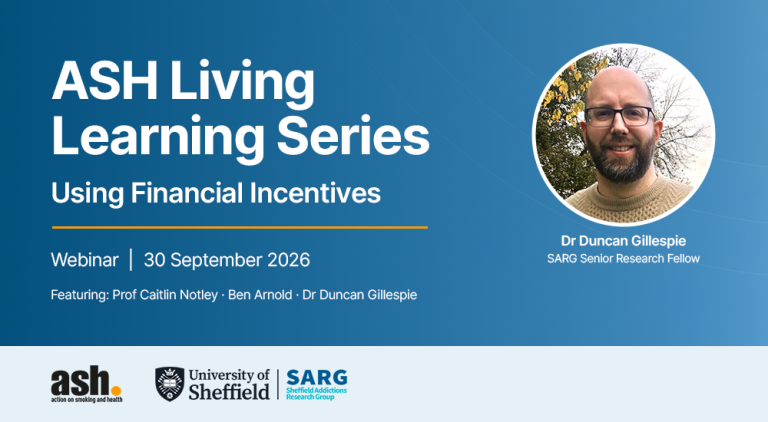
Sheffield smoking cessation research on the agenda at national ASH webinar
University of Sheffield research evaluating the use of financial incentives to help people quit smoking in Sheffield has featured at a national webinar hosted by Action on Smoking and Health (ASH).
-
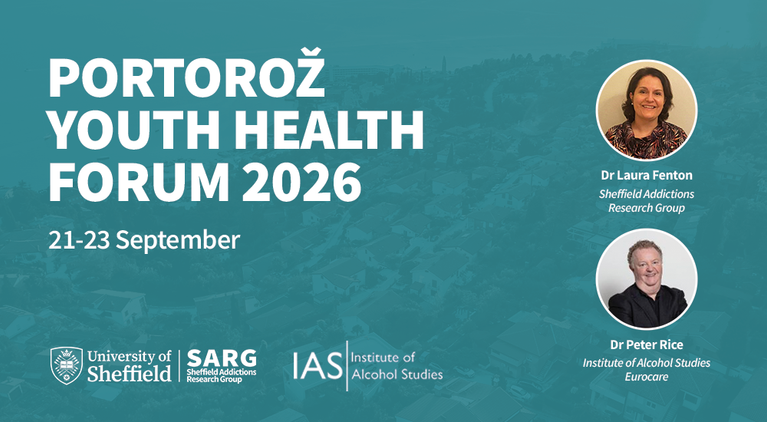
SARG and IAS partner to lead session at Portorož Youth Health Forum 2026
Dr Laura Fenton, Research Fellow at the Sheffield Addictions Research Group (SARG), and Dr Peter Rice, Chair of the Institute of Alcohol Studies (IAS) and President of Eurocare, will co-lead an interactive session at the Portorož Youth Health Forum 2026 in Slovenia.
-
The higher cost of a healthier option: SARG study lifts the lid on why no/lo alcohol beer drinkers feel out of pocket
People buying alcohol-free and low-alcohol beers pay more for choosing a healthier option, according to new research by the Sheffield Addictions Research Group (SARG).

New on the blog
-
From sewage to statistics: What wastewater testing could add to population modelling
Charlotte Head explores how wastewater testing could provide new insights into tobacco and nicotine use at a population level. She explains how wastewater-based epidemiology works, its advantages and limitations, and how it could complement synthetic population modelling to give a better understanding of patterns of use.

Latest journal papers
Research collaborations