
When it comes to understanding how alcohol policies affect health and social outcomes in the population, models can be powerful tools. They help us predict how changes in policy, like pricing or treatment for alcohol dependence, might influence alcohol consumption, health outcomes, and social harms.
Most existing models split their analysis into two parts. On one side, you have public health models that look at population-level drinking patterns. On the other hand, clinical models focus on people with alcohol dependence. What's missing is a model that connects these two, or one that can show how alcohol policies impact everyone who drinks, from lower-risk drinkers, to those with alcohol dependence.
At the NIHR Policy Research Unit in Addictions, a collaboration between several universities including the University of Sheffield, we set out to address this problem. We wanted to design a plan for a unified alcohol policy model that gives governments and policymakers a complete picture of how policy decisions affect the entire population of drinkers.
Planning the expansion of SARG's alcohol policy modelling
In the Sheffield Addictions Research Group, we've developed powerful modelling tools like the Sheffield Alcohol Policy Model (SAPM) and the Sheffield Tobacco and Alcohol Policy Model (STAPM), which have influenced key policies such as minimum unit pricing (MUP) and UK drinking guidelines.
However, these models classify people by how much alcohol they drink and not by whether they experience alcohol dependence. They don't yet account for how people move into or out of dependence, or how treatment impacts them.
We wanted to plan how to expand STAPM to incorporate these additional dimensions. Our goal was to create a visual roadmap for a future model, highlight the most important research priorities and outline clear recommendations for how to get there.
Involving professional stakeholders and people with lived experience in developing our roadmap
To ensure the plan was relevant to policy and truly reflected the real-world impact of alcohol harm, we spoke to a wide range of people: policymakers, researchers, clinicians, and importantly, those with lived experience of alcohol harm.
We worked closely with members of the Addictions Patient and Public Involvement (APPIE) network, a network of people affected by alcohol harm set up by the Policy Research Unit in Addictions. Together, we explored what really matters when it comes to representing alcohol dependence in a policy model.
Our engagement activities included:
- Two online workshops with APPIE members to discuss the most important aspects of alcohol dependence and how policy might affect people with dependence differently.
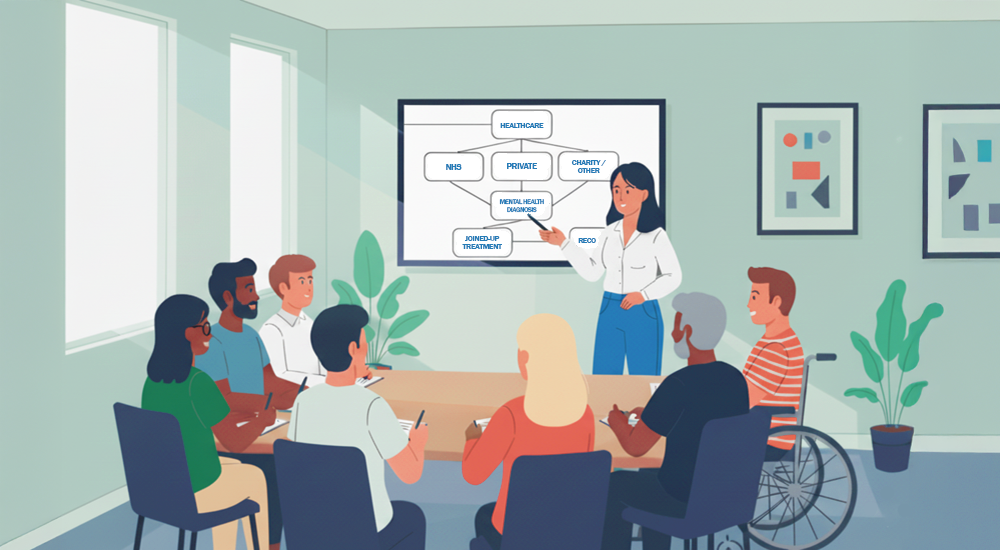
- An in-person workshop in London with 15 key stakeholders from across England, Scotland and Wales, including representatives from government, charities, clinical practice and our lived experience members.
In that final session, we focused on:
- The most important policy questions that need answering.
- What the model needs to include to answer them.
- Where the evidence gaps are, and how we can fill them.
The insights from these discussions directly informed our final report to the NIHR and Department of Health and Social Care, which lays out the next steps for developing this new model.
Key findings and recommendations
Through our engagement work, we identified five key systems that any future alcohol policy model should include, ranging from primary prevention (like pricing policies) to a support system that covers both clinical treatment and broader recovery services for people with alcohol dependence.
Our recommendations cover several priorities:
- Refining estimates of how policies (e.g. those that impact the price or availability of alcohol) influence consumption, dependence and relapse.
- Evaluating the impact of joining-up treatment for alcohol dependence with treatment for mental health conditions.
- Collecting better data and linking existing datasets.
Summary and impact on future policy
Our plan lays the groundwork for a more comprehensive and inclusive approach to alcohol policy modelling that brings together public health and clinical perspectives. By integrating alcohol dependence into broader population models, we can help policymakers understand not only how a policy affects overall consumption, but also how it impacts people differently depending on how they drink.
Ultimately, this approach will make future policy analysis more equitable, more accurate, and more useful, helping to design policies that work for everyone.
Next steps and resources
Building complex models like ours is a long-term process that often takes years. Right now, our timeline is still uncertain since we face some limitations in the data that we have access to. Moving forwards, our next steps are preparing an academic journal article to share what we've learned so far, and using our findings to guide future research projects that will help to develop our model in the future.
You can learn more about this project, including how insights from people with lived experience shaped our work, in our animated video and accompanying information sheet.
This project is funded by the NIHR Policy Research Programme (Reference NIHR206123). The views expressed are those of the author(s) and not necessarily those of the NIHR or the Department of Health and Social Care.