
SARG team to present at UK Society for Behavioural Medicine Annual Scientific Meeting
Luke Wilson, Anna Butters and Maddy Henney will present on no- and low-alcohol drinks, Dry January and food insecurity.
UKSBM 2024 takes place in Glasgow on 13th and 14th March 2024 and aims to showcase the best of the UK's research into behavioural medicine.
The Sheffield Addictions Research Group (SARG) is well represented with three spots in the programme:
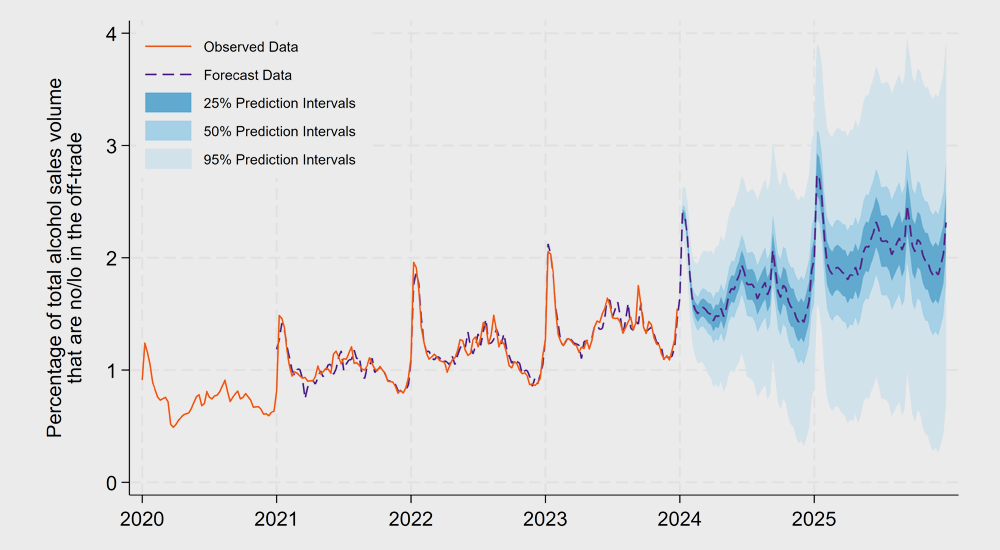
Luke Wilson: Current and future trends in the consumption, sales and purchasing of no- and low-alcohol products in Great Britain between 2014 and 2023
Luke will talk about research carried out as part of an NIHR-funded project examining the potential impact of no- and low-alcohol (no/lo) drinks on public health in Britain.
The research shows that sales of no/lo drinks have been increasing and are projected to continue to grow steadily in both the on- and off-trade. It also predicts a growth in the number of people using no/lo drinks in their attempts to moderate their alcohol intake.
The presentation will look in detail at data sources and analysis methods, key figures and estimates for future sales and consumption trends.
Anna Butters: Understanding reductions in alcohol consumption following participation in Dry January
Anna will present findings from her PhD research which is investigating the long-term effects of Dry January on alcohol consumption.
Her research has found that people who participate in Dry January, especially those who register for the official campaign, are found to drink less six months later.
The research also looks at what factors might help people maintain this change – she found that believing in your ability to resist drinks (drink refusal self-efficacy), feeling less like a "drinker" in general, and being motivated to change are all linked to alterations in alcohol consumption after Dry January.
Maddy Henney: A conceptual model of food insecurity interventions
Maddy will present a poster on her work developing a conceptual model for assessing the effectiveness of different interventions that aim to reduce food insecurity.
The model considers various factors that might influence someone's decision to use a food insecurity intervention such as a food bank or social eating space, like how easy it is to get to or if people feel comfortable using it.
The model is the first step towards building a mathematical tool that can estimate the impact and effectiveness of different food insecurity interventions.
-
Sheffield smoking cessation research on the agenda at national ASH webinar
University of Sheffield research evaluating the use of financial incentives to help people quit smoking in Sheffield has featured at a national webinar hosted by Action on Smoking and Health (ASH).
-
SARG and IAS partner to lead session at Portorož Youth Health Forum 2026
Dr Laura Fenton, Research Fellow at the Sheffield Addictions Research Group (SARG), and Dr Peter Rice, Chair of the Institute of Alcohol Studies (IAS) and President of Eurocare, will co-lead an interactive session at the Portorož Youth Health Forum 2026 in Slovenia.
-
The higher cost of a healthier option: SARG study lifts the lid on why no/lo alcohol beer drinkers feel out of pocket
People buying alcohol-free and low-alcohol beers pay more for choosing a healthier option, according to new research by the Sheffield Addictions Research Group (SARG).
-
Tobacco company levy could raise up to £4.9bn and prevent 10,000 hospital admissions, study suggests
New modelling from the Sheffield Addictions Research Group shows a 'polluter pays' levy scheme could cut smoking deaths, reduce hospital admissions, and raise billions in tax revenue.
You might also be interested in…
-
The higher cost of a healthier option: SARG study lifts the lid on why no/lo alcohol beer drinkers feel out of pocket
People buying alcohol-free and low-alcohol beers pay more for choosing a healthier option, according to new research by the Sheffield Addictions Research Group (SARG).
-
New SARG study finds young people are three times more likely to start with alcohol than no/lo alternatives
New research from the Sheffield Addictions Research Group (SARG) and University College London (UCL) has found that young people aged 16-25 in Great Britain are three times more likely to start drinking alcohol than alcohol-free and low-alcohol (no/lo) alternatives.
-
SARG to showcase latest public health research at UKSBM Annual Scientific Meeting
Members of the Sheffield Addictions Research Group (SARG) will join researchers from across the country to present work on alcohol-free and low-alcohol drinks, agent-based modelling, systems mapping and food insecurity.