
SARG researcher Dr Parvati Perman-Howe secures NIHR Career Development Award
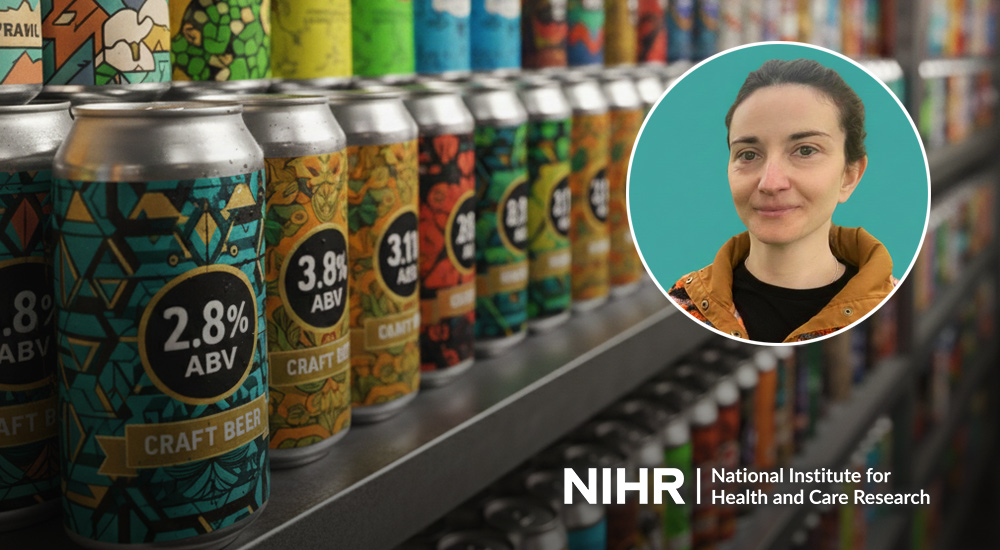
We are delighted to announce that Dr Parvati Perman-Howe, a Research Associate within the Sheffield Addictions Research Group (SARG), has secured a highly sought-after Career Development Award.
The award, funded by the National Institute for Health and Care Research (NIHR) Three Research Schools Prevention Research Programme, will support Parvati in establishing a new research agenda focused on the public health impact of mid-strength drinks.
Understanding the mid-strength drinks market
While much attention has been paid to the rise of alcohol-free and low-alcohol products, less is known about the emerging market for mid-strength drinks – beers, ciders, wines and spirits that contain less alcohol than traditional versions but are still strong enough to cause intoxication and long-term harm.
The Career Development Award will allow Parvati to investigate the mid-strength drinks market while developing her expertise as an independent researcher. This will include:
- Analysing market trends: Undertaking advanced quantitative training to analyse three major market research datasets, examining what mid-strength products are available, their prices and where they are being purchased (e.g. supermarkets, pubs) in Great Britain.
- Developing new research tools: Co-designing and piloting a survey to understand who is consuming these drinks, in what contexts and why.
- Building stakeholder networks: Establishing a professional stakeholder group and a public involvement (PPI) group to help define 'mid-strength' and shape the research project and its outputs.
Building on SARG's alcohol policy research
This new award complements SARG's existing portfolio of research, particularly our work on the No/Lo Project, which is evaluating the public health impact of alcohol-free and low-alcohol (no/lo) drinks. Parvati is a key member of the No/Lo Project team and led one of the first UK studies characterising consumers of no/lo drinks.
Parvati's research will also link closely with our work evaluating the 2023 UK alcohol tax reforms. These reforms changed the duty system to tax all drinks based on their strength, creating new commercial incentives to produce mid-strength products. Parvati's project will provide early evidence to support future research determining whether these drinks act as a tool for harm reduction or an industry strategy to encourage additional consumption.
Timescales and next steps
The 12-month project officially starts in March 2026. The award will provide Parvati with the evidence and advanced data skills necessary to launch a larger programme of work. Following the completion of this project, she plans to secure further funding to lead a national-scale evaluation of the public health impact of mid-strength drinks.
"I am delighted to have the support of the NIHR Three Research Schools as I move toward research independence," says Parvati. "I am particularly interested in mid-strength drinks because, despite their growing popularity, their health implications remain under-researched. Investigating where these products fit within the wider alcohol market is essential for developing evidence-based policies that effectively protect public health."
Parvati will present plans for her research at the first NIHR Three Research Schools Prevention Research Programme annual research showcase, taking place on Thursday 5 February in Newcastle.
-
The higher cost of a healthier option: SARG study lifts the lid on why no/lo alcohol beer drinkers feel out of pocket
People buying alcohol-free and low-alcohol beers pay more for choosing a healthier option, according to new research by the Sheffield Addictions Research Group (SARG).
-
Tobacco company levy could raise up to £4.9bn and prevent 10,000 hospital admissions, study suggests
New modelling from the Sheffield Addictions Research Group shows a 'polluter pays' levy scheme could cut smoking deaths, reduce hospital admissions, and raise billions in tax revenue.
-
SARG researchers lead UK's biggest effort to tackle gambling harms
A major new national effort to tackle gambling harms and shape future policy, prevention and treatment across the UK is being led by researchers from the Sheffield Addictions Research Group.
-
Later pub opening hours linked to surge in alcohol-related ambulance call-outs and crime
Extending late-night opening hours for pubs and bars can lead to a significant increase in alcohol-related ambulance call-outs and reported crime, according to new research involving the Sheffield Addictions Research Group (SARG).
You might also be interested in…
-
The higher cost of a healthier option: SARG study lifts the lid on why no/lo alcohol beer drinkers feel out of pocket
People buying alcohol-free and low-alcohol beers pay more for choosing a healthier option, according to new research by the Sheffield Addictions Research Group (SARG).
-
New SARG study finds young people are three times more likely to start with alcohol than no/lo alternatives
New research from the Sheffield Addictions Research Group (SARG) and University College London (UCL) has found that young people aged 16-25 in Great Britain are three times more likely to start drinking alcohol than alcohol-free and low-alcohol (no/lo) alternatives.
-
SARG to showcase latest public health research at UKSBM Annual Scientific Meeting
Members of the Sheffield Addictions Research Group (SARG) will join researchers from across the country to present work on alcohol-free and low-alcohol drinks, agent-based modelling, systems mapping and food insecurity.