
The higher cost of a healthier option: SARG study lifts the lid on why no/lo alcohol beer drinkers feel out of pocket
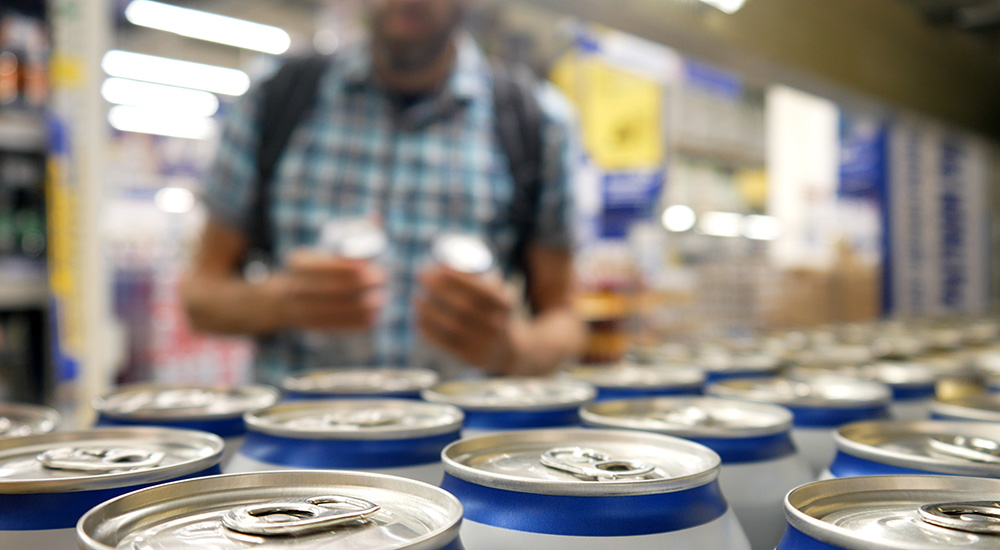
People buying alcohol-free and low-alcohol (no/lo) beers pay more for choosing a healthier option, according to new research by the Sheffield Addictions Research Group (SARG).
The research reveals how no/lo beers are not available to buy in bulk, resulting in smaller financial savings on alcohol-free and and low-alcohol drinks compared to regular-strength alcohol.
It found that while no/lo drinks in shops and supermarkets are priced lower than their regular-strength counterparts – with the the average price of no/lo beers 19% less than standard beers, and no/lo ciders 27% less – customers end up paying more on average when buying no/lo beer.
This is because regular-strength beers are far more commonly sold in larger, more cost-effective multipacks. For no/lo cider, this same lack of bulk packaging means prices remain roughly equal to standard cider rather than offering a saving.
The study, published in the journal Addiction and funded by the National Institute for Health and Care Research (NIHR), also reveals that top-selling no/lo beers are positioned in the market as premium drinks, rather than alcohol-free and low-alcohol equivalents of popular budget brands, which may contribute to their higher prices.
Despite 49 out of 52 top-selling no/lo products costing less than standard alcoholic products of the same brand, consumers are losing out on the large savings enjoyed by those buying regular-strength products in bulk.
This is because 53% of standard beers were sold in packs of eight or more cans or bottles, but all no/lo beers are sold in smaller packs.
This means consumers saved only 12% on average for no/lo beer, compared to the 30% that can be saved by buying larger packs of regular-strength beer.
However, there is not enough evidence to suggest that reducing the prices of no/lo beers and ciders would help people drink less.
Dr Abigail Stevely, Research Fellow at the Sheffield Addictions Research Group, and lead author of the study, said: "Consumers saving less when they buy no/lo beer instead of standard strength beer may mean people are less likely to switch to these healthier products. However, it is important to remember that the most effective way of tackling the UK's crisis-level alcohol-related harms would be increasing the price of cheap alcohol, and limiting the marketing and availability of alcohol."
Professor John Holmes, Professor of Alcohol Policy at the Sheffield Addictions Research Group, and a co-author on the study, said: "We know people on low incomes suffer more harm from alcohol. High prices for no/lo drinks may mean the group that would benefit most is least able to afford them."
This study follows previous research by the Sheffield Addictions Research Group which found the sales value of no/lo drinks has more than doubled since 2020, soaring to £362 million in 2023. The report from September 2025 also showed people who drink at 'risky' levels are more likely to consume no/lo drinks.
The research was conducted as part of the No/Lo Project, a four-year NIHR-funded research project which is investigating the public health impacts of alcohol-free and low-alcohol drinks.
Professor Adam Briggs, Programme Director for the NIHR Public Health Research (PHR) Programme, said: "The findings identified by the study team illustrate how the no/lo alcohol market is evolving over time. Alcohol remains a leading cause of preventable poor health and premature death, and studies like this are key to providing the evidence needed to shape future alcohol policy and support the government's shift from sickness to prevention."
Paper reference
Stevely AK, Wilson LB, Angus C, Critchlow N, Kersbergen I, Tian M, Holmes J (2026) Are alcohol-free and low-alcohol drinks more expensive than regular-strength drinks? A descriptive analysis of sales data from Great Britain, 2024 Addiction DOI: https://doi.org/10.1111/add.70568
-
Tobacco company levy could raise up to £4.9bn and prevent 10,000 hospital admissions, study suggests
New modelling from the Sheffield Addictions Research Group shows a 'polluter pays' levy scheme could cut smoking deaths, reduce hospital admissions, and raise billions in tax revenue.
-
SARG researchers lead UK's biggest effort to tackle gambling harms
A major new national effort to tackle gambling harms and shape future policy, prevention and treatment across the UK is being led by researchers from the Sheffield Addictions Research Group.
-
Later pub opening hours linked to surge in alcohol-related ambulance call-outs and crime
Extending late-night opening hours for pubs and bars can lead to a significant increase in alcohol-related ambulance call-outs and reported crime, according to new research involving the Sheffield Addictions Research Group (SARG).
-
New SARG study finds young people are three times more likely to start with alcohol than no/lo alternatives
New research from the Sheffield Addictions Research Group (SARG) and University College London (UCL) has found that young people aged 16-25 in Great Britain are three times more likely to start drinking alcohol than alcohol-free and low-alcohol (no/lo) alternatives.
You might also be interested in…
-
Health inequalities and no/lo drinks the focus of upcoming webinar
Are no- and low-alcohol drinks truly a healthier alternative for everyone? PhD student Lucy Burke will explore this question in a free online session on Wednesday 5 February 2025.
-
No/Lo Project
The No/Lo Project investigates whether non-alcoholic or low-alcohol drinks can improve people's health. These drinks are beers, ciders, wines, spirits that are alcohol-free or contain a little alcohol. We call them no/lo drinks.
-
Understanding barriers to the use of alcohol-free and low-alcohol drinks to reduce alcohol consumption among individuals from lower socioeconomic backgrounds
This project aims to shed light on why alcohol-free and low-alcohol drinks may not be as accessible or appealing to those from disadvantaged communities.